5.28.2010

In Theaters: Micmacs


Jean-Pierre Jeunet's new film Micmacs (Micmacs à tire-larigot) reflects a very French love of clowns, mimes, and circus folk. It is a whimsical concoction that returns to the visually inventive style that Jeunet is known for. The filmmaker's predilection for mute losers and homemade machinery is on full display, as is his sense of humor, which favors the silent-film set-ups of Buster Keaton and Harold Lloyd. But despite all of this, Micmacs doesn't work. Its themes are murky and generic. Worse than that, the characters are one-dimensional; instead of backgrounds and revealing dialogue, they are only provided with funny costumes and acrobatic challenges. There is a flatness about the entire venture that makes the film simultaneously cartoonish and dull.

In a short prologue, we see a French solider being blown up by a landmine he is trying to defuse. This man's son, Bazil (Dany Boon), grows up to be a shiftless video store clerk who lags through life watching old mysteries and sucking soft cheeses out of their foil wrappers. One night, there is a gunfight outside in the street and a stray bullet lodges itself in Bazil's skull. Its placement is too hazardous for surgeons to attempt a removal, and Bazil must live out his days with the knowledge that the bullet could, at any moment, spontaneously complete its journey toward his brain.

From this dark, fable-like opening, we are taken straight into Jeunet-ville, as Bazil takes up with a ragtag bunch of rejects who live in a gigantic, hollowed-out trash heap. Led by Placard (Jean-Pierre Marielle), this band of misfits cannibalizes salvaged goods to create inventive new machinery and tools. Bazil channels their collective genius to serve his own purpose: to bring down the two mega-corporations who manufactured, respectively, the landmine that killed his father and the bullet lodged in his own head. This effort propels the bulk of the film, as the team stages a series of pranks and gags designed to pit the two corporate CEOs against one another.

The film's original French title roughly translates as "nonstop shenanigans." That is a fair enough characterization of the film, and it's incredible that the American distributor of the picture chose to stick with Micmacs, since it's a highly idiomatic French word that signifies nothing to the average American viewer.

"Nonstop shenanigans" though the film may be, Jeunet's visual flourishes and imaginative stunts don't add up to much. The whimsical flair of Amelie and the truly inventive momentum of Delicatessen are limply revisited, but without the essential inspiring spark of ingenuity that made those previous films memorable. There is no central guiding logic or purpose behind Micmacs, neither from a visual or character point of view. Instead, a very thin revenge story is carried out in a monotonous series of episodes that pile heavy-handed "satire" on top of some very well-worn jokes and situations.

The trouble here, I think, is the combination of the light, vibrant, playful style that Jeunet excels at, and the darker subject matter of the revenge story - a revenge that is ultimately neutered of any real danger or consequence. Jeunet's approach does not gel with the deadly impact of the arms industry that we see at the picture's start - Bazil's injury and his father's death. The stakes are uneven; comedy can hardly trump deadly force, can it? On some level, Benigni's Life is Beautiful suffers from the same quandary, although ultimately that film is far less tasteful than Jeunet's. Still, style and content seem mismatched in Micmacs - it's a juxtaposition that never seems quite comfortable.

The performances are capable. Boon is an energetic clown who works hard to bring the picture to life. His antics seem occasionally arbitrary, as does the film as a whole. Truly charming, however, is Julie Ferrier as La Môme Caoutchouc, a contortionist member of the gang who develops a romantic attachment to Bazil. She has the most development of any character in the film, and her slowly increasing regard for the "lost boy" Bazil is tenderly convincing.

Micmacs has its charm, but that charm is limited by a lack of depth, both in terms of character-based substance and thematic material. There is satire here, somewhere, but it's buried beneath the enormous weight of Jeunet's dependence upon visual flourishes and the increasingly annoying buffoonery of its cast.

5.22.2010

On DVD: Tetro


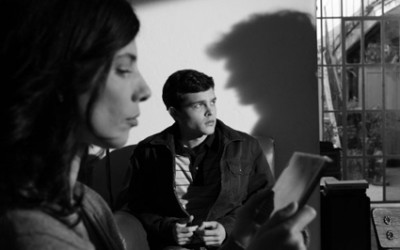
Francis Ford Coppola's Tetro is a beautiful surprise. This film flew under the radar during its initial, limited theatrical run, and was recently released on DVD and Blu-Ray without fanfare. Over a career of extremes, Coppola has created at least four unquestioned masterpieces (all in the 1970s), several entertaining, moderately-successful pictures (mostly in the 1980s), and a handful of flops (mostly in the 1990s). These highs and lows have made Coppola unpredictable from a Hollywood perspective, and had a direct impact on Tetro being a low-budget ($15 million), independently financed production. Coppola has been forced by his excesses to efficiently channel his huge talent and the result is a controlled, polished movie that tells an exciting, moving story. To those who doubt the great man as a bigger-than-life auteur who turns his film projects into enormous resource-drains, Tetro should prove that he retains all of his filmmaking skills after a couple of shaky decades.

17-year-old Bennie Tetrocini (Alden Ehrenreich) tracks down his long lost brother Angelo (Vincent Gallo) in Buenos Aires, but Angelo - now known as "Tetro" - isn't exactly thrilled to see him. For the last decade, Tetro has cut off all contact from his family, starting a new life in Argentina with his common-law wife Miranda (Maribel Verdu). Bennie is dumbfounded, having had only a single letter from Tetro since he left home, one that promised to come back for him someday. Needless to say, that never happened, and Bennie is somewhat bitter. But Tetro has changed; he crankily refuses to explain himself or talk about their shared family with Bennie. When Bennie discovers Tetro's unpublished (and autobiographical) writings, he unlocks their tortured family history. Bennie writes a play based on Tetro's work, which brings their touchy relationship to a head.

Filmed in beautifully modulated black-and-white (with flashbacks and dance sequences in color), Coppola's family story is consistently compelling and marked by a capable set of performances. Coppola's command of atmosphere is just stellar here; working with photographer Mihai Malaimare, Jr., and editor Walter Murch, he creates a noir paradise out of the film's Argentine locations. Delicately-arranged lighting and shadowed exteriors lend a mysterious weight to Tetro's commitment to self-destructive secrecy. The formal polish of the movie also suggests a bygone era of classics like Casablanca and The Third Man - both of which also dealt with characters trying to escape their pasts. Along with direct references to the work of Powell and Pressburger (especially The Tales of Hoffman), Coppola's visual approach is heightened, operatic, and supremely stylish.

As Tetro, Gallo, whose presence is at first odd and off-putting, tries hard to rise to the challenge of his inward, contrary character. Tetro has modeled his new identity as a man of mystery - an obscure, opaque "writer" who hasn't published anything. But he's also in great emotional pain, and at first, we don't exactly understand why. Gallo is good in the role, but not quite as good as he needs to be. Tetro's personality is supposed to be hidden for much of the film, but Gallo is overly emotive, telegraphing the hidden parts a bit too early. (Gallo can't be blamed for this alone, as Coppola should have been able to better manage his actor.)

As Bennie, the younger brother, Alden Ehrenreich delivers a very authentic sense of burgeoning maturity. Like Tetro, Bennie has essentially removed himself from the family. After escaping military school, Bennie has sailed around the world as a steward on a cruise ship. His only familial interest lies with Tetro, who he tries desperately to connect with.

Coppola's original screenplay builds bold characters and places them in an exotic setting conducive to a sense of unpredictability. Intertwined themes of family, betrayal, jealousy, and creativity are familiar, but are given new life through the prisms of these compelling brothers. Interpretive dance sequences that "show" Bennie's vision for his play serve as a unique way of portraying the creative process at work. The outstanding score by Osvaldo Golijov weaves a Tango-inspired soundscape throughout the picture, lending a sensual air to the whole experience.

Read the full review here

5.18.2010

On DVD: The Road


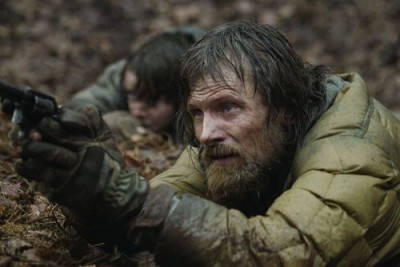
John Hillcoat and Joe Penhall's film adaptation of Cormac McCarthy's Pulitzer Prize-winning novel visualizes all of the bleakness of the original book and captures some of the emotional impact. But it lacks that central special ingredient that made the novel so important and so memorable: McCarthy's language. This is an instance of a faithfully-adapted film unconsciously slitting its own throat vis-à-vis the limitations of its medium.

A vaguely-described holocaust has left the world enveloped in what appears to be an ash-glutted nuclear winter. A man (Viggo Mortensen) and his son (Kodi Smit-McPhee) are among a very small number of human beings left roaming the earth, desperate for food, shelter, and warmth. Each day comprises a new set of life-threatening challenges, and each night is filled with black dread. Other survivors tend to be murderous cannibals, shown hunting down victims like crazed zombies.

The Road has a minimal plot. The book can be read in a sitting, and frankly, there just isn't enough there to justify a two-hour film. (A 90-minute version of The Road would have been far more compelling.) But the issue of length pales when measured against the issue of voice. Cormac McCarthy is a unique stylist, and his narrative voice is a large part of what makes his books work so well. Knowing this, filmmakers working from a book may choose to emphasize some aspect of the story that does not depend upon the power of language to convey its significance. By necessity, an adaptation must do something cinematic that a book cannot. In the case of The Road, the visualization of this post-apocalyptic world and its wasted landscape could serve as an illustrative "version" of the narrator's voice - showing us what the book must describe in words.

Yet director Hillcoat and screenwriter Penhall chose to do a fairly straight adaptation of the book - faithfully translating the plot, dialogue, and situations in a workman-like manner. The resulting film is not bad, but it is more of a companion piece to the book than a new version of the story that stands on its own and has its own strengths and merits. Because it attempts to capture the whole book, the film fails to successfully address any of it. The massive emotional momentum of the book and the heartbreaking ending feel oddly neutered here for reasons I can't quite pinpoint.

Although visually ambitious on the surface, The Road doesn't quite succeed in that department, either. Color has been leeched from the images, rendering them a dusty gray. But it's monochromatic to the point of blurriness. The low-contrast images hardly bear more than a single value - even less than the average black-and-white film. Had The Road been shot in black-and-white, images could have had greater contrast, shadow, and detail, while retaining the otherwise appropriate lack of color.

The performances are strong, but somehow fail to convince; even the great Viggo Mortensen seems to be struggling against an incomplete character. Since the film wishes to "do it all" in adapting the book, there is a lack of focus; characters feel a little diffuse in both the internal and external conflicts they face. The man wants the boy to survive - but why, exactly? There are a couple of scenes in which the boy reacts to the man's behavior toward others - and there is a suggestion that the man's need to keep the boy alive in a dying world has turned him into a quiet maniac, unable to cope with the rest of humanity. These scenes hint at a powerful idea: if we cannot behave humanely towards others, what good is living? Unfortunately, this is only touched on in the latter part of the film. It is yet another aspect of The Road that fails to achieve its goal.

Read the full review here

On DVD: In Search of Beethoven


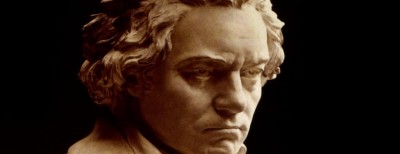
Sometimes when handling the legacy of a genius like Beethoven, it's best to let the man speak for himself. Filmmaker Phil Grabsky implicitly understands the power of the subject's own words - and, in the case of Beethoven, his music, too. In Search of Beethoven is an incisive, inquisitive documentary that compiles wide-ranging source material to form an unusually propulsive narrative life of this most towering of cultural icons.

Grabsky culls insightful commentary from a few dozen interview subjects (including Emmanuel Ax, Hélène Grimaud, Riccardo Chailly, and Sir Roger Norrington) and combines it with narration by Juliet Stevenson and readings from Beethoven's letters. In addition, we are treated to excerpts from newly-shot live performances of Beethoven's major works. Telling Beethoven's tale chronologically while balancing biographical, musical, and analytical information, Grabsky takes an approach that is both immersive and expansive. We don't just get the highlights of an accomplished life here. In Search of Beethoven takes its title seriously, investigating its subject with rare tenacity.

There is a feeling of spacious breathability about Grabsky's film; we get to spend some real time in Beethoven's world, and in his head, too. Each interview subject is allowed time to fully explicate their insights or responses to Beethoven's music, rather than being reduced to context-free sound bites. The performance footage is used extensively, and excerpts are generous enough so that we have an opportunity to really listen to them. The readings from Beethoven's letters are selected carefully and they do much to shape the sense of narrative. This isn't a rushed, 45-minute episode of Biography. In Search of Beethoven is a leisurely 139 minutes, but none of this length is wasted. A cohesive editorial strategy, guided solely by the linear chronology of its subject's life, keeps things moving forward, and the pauses to listen to excerpts from Beethoven's work are like cool oases.

Although it certainly has enormous value on its own as a film, another benefit to be gained from In Search of Beethoven is a renewed interest in classical music. I, for one, was propelled to download a number of Beethoven recordings and request a print biography from the library. This isn't because the film doesn't do a good enough job of covering its subject - it's because it does such a good job making Beethoven come alive that you want even more when the film is over. 

Read the full review here

On DVD: Extraordinary Measures


Like a lot of made-for-TV movies, Extraordinary Measures (which was released theatrically) fails to live up to the compelling true story it was based on. Taking a real-life tale of struggle and triumph over a debilitating disease, and forcing it into a conventional three-act structure jam-packed with all manner of clichés, Extraordinary Measures is leeched of reality's unpredictability and the precarious life-or-death stakes that the participants faced.

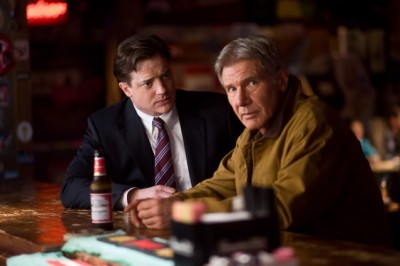
John Crowley (Brendan Fraser) is a Portland, Oregon, pharmaceutical executive with a charming wife (Keri Russell), living in his own suburban paradise. However, two of his three young children suffer from Pompe disease, a genetic condition that erodes the muscles and nerves of its victims. The two younger Crowleys are not expected to live past age 9. But John is determined to seek a cure for the disease. He contacts Dr. Robert Stonehill (Harrison Ford) at the University of Nebraska after reading some journal articles by Stonehill that detailed his research on enzyme therapy. Their relationship has a rocky start. Stonehill is cranky and abrupt, prone to impatience. Content to work alone but wary of receding grant support, Stonehill agrees to enter into a partnership with Crowley to develop a drug to treat Pompe disease. Forming a corporation is a challenge, but it comes as no surprise when Crowley and Stonehill finally reach success.

It's an odd shame that "disease of the week" films have such a stigma attached to them - that they have a tendency to take some of life's most challenging, arduous, gut-wrenching experiences, and plop them into a mundane formula. Extraordinary Measures could have been made thirty years ago; the way it's constructed and written is no different from decades of similar films. The fact that this story found studio support as a theatrical release is all the more strange, given its subject matter, although that may be attributable to the star power of its cast.

As Crowley and Stonehill, Brendan Fraser and Harrison Ford do fine. Both perform earnestly against the rather unchallenging material; I'd venture to guess that Ford rewrote most of his lines, as they stand out as having a different quality than those of the other characters. Fraser and Ford in conversation almost sound as though they are acting in two separate films. Still, both actors try hard to overcome the clichéd limitations of the material and make their characters come alive.

Interesting supporting actors such as Russell, Jared Harris, Patrick Bauchau, and Courtney B. Vance are thrown away in thankless, one-dimensional roles. The script, by Robert Nelson Jacobs, just doesn't trust in the characters enough, relying far too heavily on the circumstances of the disease-driven plot to propel the story. Director Tom Vaughn seems at a loss as to how to add anything of value to the film. It's visually static and dialogue-driven, in keeping with the conventions of the genre.

There's nothing flat-out bad about Extraordinary Measures; the worst that can be said about it is that its predictability renders it boring. The storytelling is just plain lazy, as evidenced by lines like this one (spoken by Fraser): "This isn't about a return on some investment - this is about kids!" True stories are often fumbled by filmmakers unwilling to take a leap of faith in adapting the material to film; no doubt there's a wellspring of humanity at the heart of Crowley's and Stonehill's story. But the movie doesn't work to find it, relying on a bloodless sequence of events to telegraph the significance of the two men's achievements. This otherwise interesting story is likely better covered in the nonfiction account by Geeta Anand, The Cure, upon which the film is based. 

Read the full review here