1.27.2011

In Theaters: Biutiful


I walked out of Biutiful, so take this review with an appropriate measure of skepticism. I haven't walked out of a movie in years, but Biutiful seemed to be daring me to leave within its first twenty minutes. Despite an arresting pair of opening moments, Biutiful devolves into a sluggish, meandering, dour assemblage of scenes that are utterly - shockingly - without momentum. At two-and-a-half hours, Biutiful is not the longest of movies, but after nearly half of that length, I felt like I'd spent a whole day in the theater without getting anywhere. I could not stand to spend another minute in the presence of co-writer and director Alejandro González Iñárritu's dire worldview and Javier Bardem's tragic, self-hating face (a good performance though it is).

Biutiful is packed with characters, incident, and plot, but part of the film's problem is a lack of emphasis. Every scene, every interaction between characters, and every complication of the plot has the same relative value. The movie never feels like its moving anywhere. We appreciate that Bardem's character, Uxbal, is a dying man with a disordered life that includes an estranged wife, two young children, and a career split between petty black market crime and serving as a medium, relaying messages between the recently dead and their loved ones. As his own death nears, Uxbal is driven to set some of the many wrong things in his life right.

Despite walking out, I cannot say that Biutiful approaches true "badness." It just offers little to the viewer in terms of a connection to the proceedings unfolding on-screen. We are positioned as voyeurs, taking a casually-observed tour of one man's sloppy, unhappy life. But there's no voyeuristic thrill in Biutiful, nor is there sense that the things we are spying on have been judiciously selected for maximized impact. Instead, everything is lumped together, from the most mundane to the most significant. Every scene has the same relative dramatic weight, which is the same as saying that they have none at all.

Bardem gives a performance of unfathomable depth. His engagement with the material displays nothing less than a complete dedication to his character. But his efforts are betrayed by Iñárritu's bizarre insistence that each scene be structured and paced with an exacting sameness; even the screen time of each scene seems to be the same. There is no pacing. Although the photography is technically and aesthetically accomplished, the look of the film also suffers from stagnancy. After a few scenes, the film ceases being visually dynamic, neither from photographic nor editorial standpoints.

Although the filmmaker's outlook is dour, that's not what made me realize there were better ways to spend a Sunday. It was the film's glacial pace and a complete lack of storytelling mojo. It wasn't the kind of story that Biutiful tells, it was the extraordinarily tiresome way it chose to tell it.

Read the full review here

1.20.2011

On DVD: The Films of Rita Hayworth (DVD)


Cover Girl (1944) is a bouncy musical starring Hayworth as Rusty, a showgirl who goes after an opportunity to be on the cover of Vanity Magazine's anniversary issue. Her dance hall boss and paramour Danny McGuire (Gene Kelly) is too proud to ask her to stay on at her nightclub gig once she's offered the magazine cover, so he sends her packing. Rusty goes on to become a Broadway star, on the verge of marrying a big-shot producer, when Danny returns for the inevitable reunion. 

Cover Girl's story is formulaic, but the Kelly-directed dance sequences are just dazzling. Charles Vidor's crisp direction keeps us moving quickly past the more groan-inducing plot points, keeping the musical numbers snappy and fun, despite the fact that some of the songs lack staying power. Hayworth and Kelly are joined by Phil Silvers as Kelly's sidekick, and by outstanding Technicolor photography courtesy Allen M. Davey and Rudolph Maté. 

Cover Girl's lasting reputation owes more to Kelly's genius than to Hayworth's star power, although her allure is on full display here; without her combination of beauty and vulnerability, the character dynamics in Cover Girl would be a drag.

Tonight and Every Night (1945) is a wartime "the show must go on" story, purporting to tell of a London theater that manages to maintain an uninterrupted performance schedule during the Blitz. Hayworth plays the hall's star performer, Rosalind Bruce, who, along with her fellow dancers, keeps a stiff upper lip throughout nights of bombing, putting on show after show and falling in love with a British pilot (Lee Bowman) to boot.

The film is memorable for its bold design, inventive musical numbers, and lush color photography. Directed by Victor Saville without a whole lot of concern for story or character, this is a vehicle for the film's visual team, including Rudolph Maté (DP, again) and production designers Lionel Banks, Stephen Goosen, and Rudolph Sternad, as well as costume designers Jean Louis and Marcel Vertès. The skeptical viewer will have a hard time accepting the flawlessness of this theater's purported productions and the richness of their design during the strictures of rationing, to say nothing of the presumed inability of the cast and crew to obtain new materials and equipment in bombarded London. But Tonight and Every Night is successful as a spectacle, helped immeasurably by the dancing of the great Marc Platt.

Gilda (1946) is one of the greatest, and most twisted, films in the noir catalog. Charles Vidor again directs Hayworth as the title character, whose creepy husband, Mundson (George Macready), operator of an upscale underground Buenos Aires casino, has just hired a hapless would-be grifter named Johnny Farrell (Glenn Ford) as the casino's new manager. Little does he know that Farrell and Gilda were once lovers, a relationship that scarred Johnny, and left him with feelings for Gilda that veer wildly, from disgust to lust.

Gilda's screenplay, by Marion Parsonnet, from a story by EA Ellington, is one of the most quietly bizarre and unpredictably grotesque in film history. The plot's twists and turns are all bound up with Farrell's perverse, extreme feelings of love and hate for Gilda, and with the twitchy dynamic tension that builds between Farrell and Mundson character. 

Vidor's direction is oddly but deliberately paced, lingering here and there on strange moments with just the right sense of voyeuristic observation. The musical numbers are seductive. Rudolph Maté returns as cinematographer, and he tempers his elegant sensibility with a smart infusion of deep shadow. Able support is provided by the great Joseph Calleia as Detective Obregon, who investigates Mundson's criminal activities. Gilda is an unmitigated classic with great, strange depth of feeling - the tension between Hayworth and Ford is one of the most striking things in noir history.

Miss Sadie Thompson (1953) is a neutered adaptation of Maugham's story "Rain," previously filmed at least twice during the silent era, but more memorably as Rain (1932) with Joan Crawford. Rita Hayworth was an excellent choice for the remake, but the timing was poor. The early 1950s was a bad time for honesty in Hollywood cinema, and Miss Sadie Thompson's script is a good demonstration of an industry afraid of human nature.

In this adaptation, Maugham's prostitute is simply made into a woman with a shady past, and when she arrives in American-occupied Samoa, the Marines (who include Aldo Ray, Charles Bronson, and Rudy Bond) compete aggressively for her attention. The preacher who wants her sent away (Jose Ferrer) is not a shady creep in the way Walter Huston was in Rain - he's just some generic Puritanical authority figure. Thanks to the Production Code, the whole story has been made so vague, we're not really sure what the hell's going on. It's surprising anyone was inspired to adapt the material at all, under the circumstances. Miss Sadie Thompson does share one noteworthy aspect with the other films in this set: outstanding photography, in color, by Charles Lawton, Jr.

Salome (1953) is a perfunctory Biblical non-epic with a stage-bound look and a talented cast who mostly appear as if they would prefer to be elsewhere. Hayworth plays the temptress of the title, and Charles Laughton plays Herod with less deliciousness that we expect. Cedric Hardwicke, Judith Anderson, and Stewart Granger are also on hand to deliver stilted dialogue without much inflection; Anderson is the only one who offers any sense of drama - the others seem like they're mostly thinking about what they're going to have for lunch.

Director William Dieterle doesn't appear to have had a concept for the movie. He seems to have been relying upon star power and the familiarity of the storyline. Even the Dance of the Seven Veils has no real appeal - Hayworth is a capable dancer, but her movements look like they were designed and directed by Robby the Robot. Salome is one of the weakest of the '50s many religious adaptations. 

Read the full review here

Essay: Mid-Winter Sun

Yes, I'm posting something about the weather of all things, but bear with me:

I'm not one of the millions who adore California's weather beyond all reason.  I like marked seasonal shifts.  I like variety.  I like seasons to feel like their names, even if that entails snow and ice and real storms.  Where I live, this type of thing is far from the norm, but I've lived in places where it is, so I know what I'm missing and I know what I've got.


This year hasn't been an average one, though, for northern California.  It's been cool and damp. 
After a dreary few months here, the sunshine has broken through this week, and it feels special for once instead of routine and oppressive. It's that bright semi-warm winter weather that makes you feel like anything is possible. 

Seasonal Affective Disorder is really just a matter of degree, isn't it?  Who feels happier after weeks of nonstop cloud cover?  This rare instance (for our area) of the sun actually feeling fresh and restorative is a welcome one - although I know all too well how the coming spring and summer will likely feel: head-poundingly hot, dire with the whitest sunlight imaginable, and occasionally even overwhelming.


But for now, the feeling that the routine has shifted is therapeutic - the sense that things can change, that all directions are available.  That's the value of these surprise shifts in environment, mood, and "tone" of the day-in, day-out chores we all perform.  When the things around you change, even slightly, whether as a result of internal will or external force, you feel like you are being offered an opportunity.  Even on this minimal scale, it's weirdly exciting.

1.12.2011

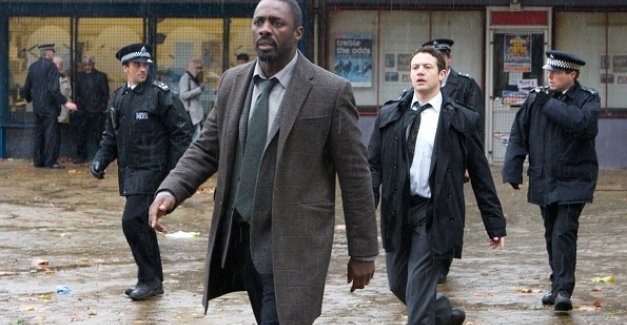
On DVD: Luther: Series One


The BBC police drama Luther, starring Idris Elba as a London detective, generates suspense and entertainment value without ever doing anything outside of genre conventions. Its grittiness is too slick to feel dangerous, its characters are familiar, and its larger story arcs too predictable. Yet Elba is forceful and appealing, and his DCI John Luther has more than enough flaws and dark places to make the character compelling.  The show displays a certain awareness of its own edge, but I wanted it to push the envelope even more, despite moments of real polish and even excellence.

Created and written by Nick Cross, the first series of
Luther comprises six episodes that maintain a careful balance between episode-specific plots and series-long story arcs. John Luther is a cop tormented by a sense of empathic injustice he feels on behalf of the victims of the crimes he investigates. In the opening episode, Luther is seen extracting information from a child-killer who hangs above a gaping chasm. After getting what he needs out of the killer, Luther watches, frozen, while the killer slowly loses his grip and falls several dozen feet.

In this scene, as in many others, Elba's characterization captures the fidgety dueling impulses within Luther. We see him at once grappling with a desire to punish the killer, as well as with an understanding of the limitations of the laws he upholds. Luther is a good man, no doubt, but he has to manage some serious self-destructive tendencies.


The killer survives the fall, and spends much of the series in a coma. Luther, however, is cleared of wrongdoing by an internal investigation, and is back to work after a few months. His first case involves what looks like a home invasion gone bad: a middle-aged couple is gunned down, along with their dog. Luther almost immediately suspects their daughter, a chilly, intelligent red-haired siren named Alice Morgan (Ruth Wilson). But without physical evidence to connect her to the crime, Luther has to let her go. Luther and Alice are both intellectuals with a complex grasp of right and wrong, and of their respective and somewhat iffy positions on either side of the criminal divide. This relationship continues to develop throughout the season, at some points reaching odd and interesting places, and at other times appearing too contrived. In particular, Alice's more moustache-twirling, Moriarty-esque moments are a bit rich with vaudevillian villainy.


Also at the forefront of the ongoing plot is Luther's relationship with his estranged wife, Zoe (Indira Varma), who has taken up with another man, but who remains in a precariously vulnerable position of with respect to Luther's rage over their split and Alice's ongoing stalking of her.


Elba is commanding, to say the least, in the title role. His charisma is probably the major reason
Luther works as well as it does; the series, as written, could have easily been much more hackneyed. Luther's brilliance as a detective often comes across as too convenient. His investigative techniques are never explored in any depth. Instead, he intuitively hits on right answer after right answer. We never really know how he thinks through his police work. The plot-oriented conflicts that Luther contends with - his relationship with Zoe, his rivalry with Alice - drive the story's momentum, and Elba works hard to keep things afloat, turning Luther into a fireball of energy who is unpredictable and quick-witted. He makes the character fascinating to watch, despite being under-written. 

Read the full review here

1.11.2011

On DVD: Exit Through the Gift Shop


Banksy's Exit Through the Gift Shop utilizes the approach of Orson Welles' F for Fake to satirize the art world and bring renewed focus to the subversive nature and misunderstood philosophy of street artists. It is an entertaining peek behind the scenes of the street art movement, a faux-documentary farce, and extremely clever propaganda all in one. It's also surprisingly understated, revealing its layered significance more extensively upon reflection, after its short running time has ended. Banksy, as always, comes across as a ballsy self-promoter swathed in self-conscious mystery, yet somehow Exit Through the Gift Shop never really feels like it's about him, exactly, let alone the valentine to his own genius that it might appear to be upon first glance.

Banksy appears on-camera (maybe) in a hoodie, with his voice electronically altered, to announce that his film is a quasi-accident deriving from the "lost" footage of one Thierry Guetta, an expatriate Frenchman living in Los Angeles who fell in with the street art crowd and became their self-appointed documentarian. Claiming all the while that he was creating the "ultimate street art documentary," the hyper-edited film that Guetta shaped out of tens of thousands of hours of footage of artists like Shepard Fairey, Monsieur Andre, and Borf turns out to be unwatchable. To keep Guetta out of his hair, Banksy encourages him to become a street artist himself, and Guetta assiduously throws himself into producing an enormous exhibition, designed to rival Banksy's then-recent LA blockbuster "Barely Legal." Guetta sells everything he owns and re-finances his property to underwrite assembly line-style art production on a massive scale - all of which he credits to his new persona, Mr. Brainwash, or MBW. The show, which is a near-disaster in the planning stages, ultimately opens to huge attendance and commensurate sales: Guetta makes something like a million dollars in short order.

No matter how you take the story it tells - as legitimate or as a hoax -
Exit Through the Gift Shop is a film of minor genius that makes a scorching point about the state of the "art world" with exquisitely aloof restraint. Paired with 2009's brilliant The Art of the Steal, about the City of Philadelphia's conspiracy to seize the Barnes Collection, these two films definitively excoriate the art world's dependence upon the perpetration of outright fraud. In its understated and oblique way, Exit Through the Gift Shop discusses who is and isn't an artist, how the title of "artist" is or isn't defined, that art is collected for reasons having nothing to do with the reasons it is created, that fraud exists at every level in the art world, and that transparent fraud is itself often considered art by those who are in a position to profit off of such a characterization.

As far as the question of whether or not the film is a hoax and whether or not Guetta himself is a fictional character, my own suspicion is that the first half of the film - detailing Guetta's attempt to document the major street artists of our time - is mostly true, with the second half - focusing on Guetta's emergence as a art world superstar - being mostly a staged put-on. But I don't really care to speculate any further - nor am I curious about what bits are "real" and which are not. Banksy's film has a clear purpose and concept behind it, unlike that
other cinematic hoax of 2010. The film works, no matter how you take it. Guetta is a wonderful personality - someone who would be maddening to know in real life, but whose determined idiocy makes him the perfect subject for this film, which is at bottom, a comedy. The construction of Exit Through the Gift Shop is narratively sound, and wisely avoids hinting at what becomes of Guetta, allowing events to unfold with an unexpected naturalness. Banksy himself is only on the fringes of the proceedings, and allows themes to emerge without seeming contrived or highlighted. Banksy's biggest achievement is to tell a story of post-modern concerns and complaints utilizing a seemingly straightforward framework and having the whole thing hang together without ever referring back to the world outside of the film itself. Exit Through the Gift Shop tweaks the nose of post-modernism while making the best possible use of its tenets. 

Read the full review here