10.07.2010

Essay: The Art of Work and the Work of Art

I like to work, but am opposed to having a job.  Almost everyone works, in some capacity.  But "having a job," or working for someone else, is a guarantor of conformity.  The perceived necessity of having a job with benefits is the main distraction of adult life in America, where it's all about school, work, family.  At this moment, the question of jobs is particularly sensitive and charged.  Those without jobs, a club whose membership has grown appreciably over the last two years, are desperate for them.  They require income, food, health care, and shelter, for themselves and their families.  Protecting the brood drives the unemployed to aggressively pursue gainful employment; individuals without dependents may feel a bit more freedom to change careers during times such as these, when economies contract and markets change their shape.

But whatever the larger economic climate, those of us who are destined for another kind of productivity are stymied by the overwhelmingly dominant mindset that requires us to go to work for others.  Forty hours per week - the heart and meat of every weekday - are given over to work that ultimately, mostly, enriches others.  Our personalities, our interests, our talents, and our dreams are systematically subjugated in chilly environments that reward our toil with money and, sometimes, easy access to health care and modest investment opportunities.  I am not among those who hold Capitalism responsible for this sort of thing; nor am I saying that this set-up is definitively “bad.”  The problem is that not everyone is meant for this kind of life.  Capitalism is a useful concept, but it is borne out by human beings who make conscious choices as to how the system functions in its specifics.  Capitalism exists elsewhere, in places where the value of individual freedom of expression and freedom of mind in general are valued more highly than it is here.  The problem is cultural.  The problem is American.

If you grow up inside your head, testing ideas and experimenting in fields of creative and personal endeavor, you may wind up producing or discovering something that changes the world.  It may take a while.  People around you may have no idea what is it you are trying to do.  You yourself may be confounded by what you are compelled to pursue.  Paths of creative and scientific pursuit - paths originally trod centuries ago by driven, committed amateurs - have been professionalized to the extent that defining an individual way forward is not only untaught in either our public or private education systems, but is wholly absent from our common social discourse.  In the United States, we often suggest to one another that somehow, if someone is talented enough, they will rise to the top.  The idea that our society is intrinsically strong enough in its dynamics to "automatically" move the deserving into their proper place is a piece of outdated social Darwinism that smells vaguely of the totalitarian.  Yet this is a commonly-held trope that I continue to hear repeated in the context of conversations on the broad subject of "talent."

Capitalism reinforces and rewards hard work by individuals in operating in capacities that have the greatest social value.  In our society, these are the people whose work takes us away from quotidian concerns: athletes, actors, and musicians; or they are people who have the power of determining their own pay: corporate executives.  Occasionally, hard work by artists and scientists and other amateurs is rewarded via the marketplace.  More often, people in these fields are merely faced with raised eyebrows and suspicious glances, especially when they suggest that they should be paid for what their brains do.  Odd, given the money earned by people who answer telephones, throw balls back and forth, and pretend to be imaginary characters.

I have spent much of the last decade entangled in professional misdirection that has not brought me any closer to where I want to be in life.  This was a mistake on my part, and I'm responsible for it.  But it wouldn't have been made if I had been surrounded by differing - or even a variety of - expectations and attitudes.  Instead it was: school, work, family.  When it came time to earn a living with a college degree in English and Creative Writing, my options seemed limited - they weren't, but it seemed that way.  So I took a job in the publishing industry, because it looked like a place where a budding writer could learn something.  I did learn something: I learned that the publishing industry had virtually nothing to do with being a writer.  I also took jobs working in the non-profit world, and learned that writing grants was not only a depressingly salesman-like process, but that it sapped me of the mental energy required to do other writing when I wasn't at work.

More recently, as I've become more aware of my place in the world as it relates to the general workforce, and my complete unsuitability as a member of it, I've taken a series of small, tentative steps toward a different kind of existence - one that is not career-minded in relation to sources of income, and one that involves wholly unremunerated work as a writer.  But, the situation allows me great energy to write, and it affords my writing exposure to a small but consistent audience.  I should point out that this all amounts to nothing more than experimentation in terms of "how to be a writer."  I’m not there yet.

This set of personal circumstances is far from the only impetus behind the reflections herein.  I have a number of close friends who are in similar straits, struggling to balance the expectations of a social structure hostile to their strengths, and talents that refuse to lie still.  They work as hard as anyone I know.  Of course, I also know people who excel in professional or corporate environments, too, and probably belong there.  But the failure of suburban America, and the values that have incubated there, is its inability to find a place for people who wish to operate outside the common school, work, family mode of life.  There is no place for them there.  In cities, there are more opportunities, but what if we don't wish to live in a city?  What if we would like to live in the countryside?  As much as we would like to pretend that the Internet has eliminated the need to live where we work, it just isn't true.  But the main problem remains one of education, comprehension, and an ability to view the world through a multiplicity of lenses.  Hemmed in, bound by either arbitrary or unimaginative conventions, artists and other individualists face a challenge that is more stifling and impossible than all the tragic opera and bohemian mythology could ever express.

10.05.2010

Essay: Recurring Nightmares

This is a loose selection of ideas that are rattling around in my head right now, looping back on themselves every so often.  Most of them are unresolvable, and some of them are going seem painfully obvious. 
  • All forms of mass communication separate us or otherwise highlight separation; they almost never bring us together.
  • The role of writers in public life is almost non-existent; this has some relationship to item #1.
  • Most journalists are moral and intellectual prostitutes.
  • Life in suburbia is a competition to see who can be the most mediocre.
  • In fifty years, the Obama presidency will probably be regarded as average.
  • I am a member of a generation of whiners, although I strongly suspect better things will emerge from the members of my generation than from the ones that immediately precede and follow it.
  • Movies are getting worse and television is getting better.  Movie theaters and bound books will largely disappear during my lifetime.
  • That line from All The President's Men - "Follow the money" - applies to every single aspect of American life, past, present, and future, and don't ever fool yourself into thinking it doesn't.
  • A childhood friend of mine is currently on trial for plotting a murder for hire.  I think about this all the time and might write something about it later - not about the trial, just about how it makes me feel (weird).
  • As I begin to pass the target age demographic for mainstream Hollywood movies, my hatred of them grows exponentially.
  • Why have I just now, in my 30s, discovered comic books and video games?  What the hell was I doing in my childhood?

10.04.2010

On DVD: Nightmares in Red, White and Blue


Nightmares in Red, White, and BlueThe Monster Show, even though neither Skal nor his book are ever cited. This is important, because many of Skal's ideas have been broadly adopted by other film historians in the decade-and-a-half since his book was first published, and are repeated almost verbatim by the ones interviewed for this documentary. A key concept posited by Skal is the attribution of the oscillating popularity of the horror genre over the last century to various social and political problems and changes. This concept has gained traction among film writers and scholars, and it's troubling to me that Skal himself is not one of the talking heads in Monument's film, and that the whole gist of movie rests upon his ideas, sans attribution. This is not plagiarism, but one would imagine that a film taking its thesis from a pre-existing source would have drilled down to the origin of that source. is a relatively entertaining documentary by Andrew Monument that efficiently surveys the history of American horror films via film clips, narration by Lance Henriksen, and original interviews with film historians and some of the foremost practitioners of the genre. It is also visually clunky, and often repeats ideas originally expressed by film historian David J. Skal in his influential book
A chronological survey, Nightmares begins with Lance Henriksen intoning that the first American horror film was 1912 adaptation of Mary Shelley's Frankenstein, a film that did not earn an audience. Skipping ahead two decades, Nightmares tracks the first significant stage of American horror development with the rise of the great monster films produced at Universal Studios in the 1930s: Dracula (1931), Frankenstein (1931), The Invisible Man (1933), with The Wolf Man (1941) coming a bit later. In the 1950s, horror blended with science fiction, as fear of the atomic bomb began to pervade all aspects of American life. The morass of Vietnam begat a more graphic horror style that continued into the 1980s and has recently seen a massive revival.

Director Andrew Monument gained access to some fantastic filmmakers as interview subjects, whose insights are more engaging and grounded than those of the film historians featured here. The filmmakers include John Carpenter, Joe Dante, George A. Romero, Larry Cohen, Roger Corman, and Tom McLaughlin. Their anecdotes about the inspiration they find in the genre, and their experiences manipulating its conventions, provide some of the documentary's best material. Carpenter dissects horror as an identification of the "location of evil." Romero categorizes his series of zombie pictures as analyses of how people behave when things go wrong (i.e., fear-based reactions that lead to chaos).


Visually,
Nightmares is problematic in two important ways. First of all, the documentary does not present film clips in their original aspect ratios. Older 1.37:1 footage is zoomed to fit the documentary's 1.78:1 frame, and widescreen 2.35:1 clips are cropped for the same reason. This is a distractingly bizarre choice for a documentary about the history of the movies. It tarnishes its own subject.

The other jarring visual aspect in
Nightmares are multiple montages of the gruesome moments from the history of the genre. At least twice, we are subjected to extended batteries of vivisection, impaling, gouging, spurting, and decapitation. These sequences strip the clips of their original shock/horror value and amount to a blunt-force assault on viewers' senses and stomachs. They are excessive at the same time that they betray the footage in its original form.

Nightmares
contains some entertainment value, and will certainly be of interest to genre fans, especially for its filmmaker interview footage. But the documentary as a whole doesn't have a particularly compelling point of view. Its reliance on the uncited work of David Skal and its discomfiting visual choices make it suspect as a genuine "tribute" to the work of others. 


On DVD: Ugly Americans: Volume One


Ugly Americans has an enjoyable irreverence about it and its EC Comics-inspired design is inventive, but this animated Comedy Central program lacks both characters we can latch onto and consistent comedy value. The premise is built around an alternate version of New York City in which monsters, demons, and all manner of fantastic and mythical creatures live side-by-side with human beings. The non-human creatures are "managed" (from a civic point of view) by the Department of Integration, which helps place them in jobs and receive education and training. The show's main protagonist, a human named Mark Lilly, works for the Department of Integration, and rooms with a zombie named Randall.

The first volume of
Ugly Americans on DVD collects seven episodes, which is admittedly not a long run for a half-hour show. (The show has been renewed and new episodes begin airing on Comedy Central this month.) Since most major network half-hour comedies run in seasons of about twenty-five episodes, it's hardly reasonable for a new series such as this to hit its stride after only seven shows. This DVD release doesn't do Ugly Americans any favors, since television programs are often clunky in their first seasons. Characters are still being shaped by the writers and actors, story arcs continue to be fleshed out, and the question of tone is often a tricky one. This is all a very long way of saying that I feel both premature in passing judgment on such a new and unpolished show. But the fact is that these first episodes aren't terrific.

The show's creators have assembled an appealing visual experience: a monster-ized NYC, designed using the recognizable color scheme and heavy outlines of EC Comics' artists of the 1950s. It's whimsical, creative, and rooted in an under-appreciated legacy. The writing, however, leaves much to be desired. The show's sense of humor derives from that stonefaced, 1990s-era, monotonous style perfected by shows like
Dr. Katz, Professional Therapist. What makes this harder to accept is the fact that the show's main characters are quite flat, without any history, dimension, or personality. The writing assumes that it is funny enough - or that the show's premise is strong enough - to float these under-developed characters through these episodes. Unfortunately, neither is true.

I'm glad that
Ugly Americans has been given further opportunity to develop its world and (hopefully) its characters. I actually look forward to checking in with the show again - perhaps when the next DVD is released. The premise is promising. The show is not wholly without laughs. It will be interesting to see whether this next set of episodes ordered by Comedy Central reflects the writers working out the kinks in the show's characters and milieu.
Read the full review here

On DVD: The Law


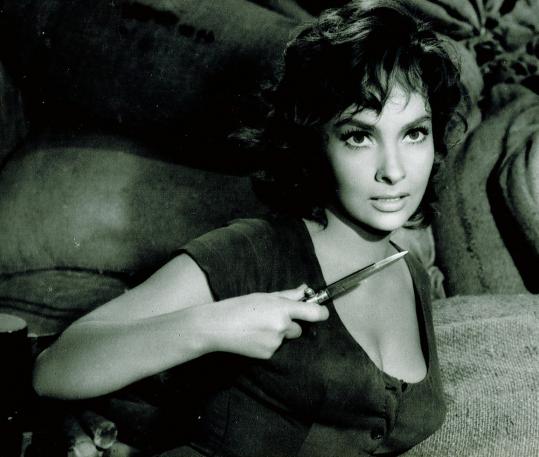
Jules Dassin's The Law is a mildly ribald, occasionally funny, often meandering tribute to Gina Lollobrigida's cleavage. Although such a tribute is surely well-deserved, the film doesn't work hard enough to deserve our involvement in it. Dassin assembles a variety of colorful characters (portrayed by an admittedly stellar cast) in a musical-comedy setting, but doesn't have the gumption to truly turn them loose. They are mostly caricatures, operating within the imagined boundaries of Dassin's conceptualization of a European sex comedy; as an American expatriate, Dassin doesn't appear to have any special understanding of the milieu he is depicting. Dassin's lack of sufficient cultural understanding here is not helped by the fact that this Franco-Italian co-production is set in a small Italian fishing village, with mostly Italian actors, but is performed (or dubbed) in French.

Dassin rests the film's credibility upon the deployment of an eponymous southern Italian drinking game, which, I learned from the DVD's extra features, is alleged to have its roots in ancient Rome. A strange iteration of role-playing, "the law" is a miniature version of the body politic, with one participant being designated "the boss" and another designated his or her deputy. These two then conspire to manipulate the behavior of all the players, with the chief object of interest being access to booze, which is controlled by the boss. The game is depicted in
The Law's first half hour, and the participants, as per the norm, are all male.

But the film is dominated by a female character named Mariette, played by Gina Lollobrigida as a willful skank who, along with her mother and two sisters, is employed by the town's de facto leader, Don Cesare. It is implied that Don Cesare enjoys carnal relations with each of his female "support staff," and although Mariette harbors a kind of affection for him, she dreams of leaving the town and enjoying a more respectable existence. Enter a character known only as "the agronomist," played by Marcello Mastroianni, an urbane professional from the north of Italy who has arrived in the area to drain the marshes and thereby rid the town of endemic malaria. Mastroianni looks askance at the entire town, Mariette included, despite her flirtatious advances. Thenceforward, we are asked to see Mariette as a "boss" of sorts, manipulating her friends and neighbors to carry out her wishes in an effort to achieve her own private ends.


Surrounding this central plot are a group of loosely connected subplots, involving a sleazy power-hungry quasi-gangster played by a sneering Yves Montand, the dalliances of the town's sheriff, and the troubled affair between the judge's wife (Melina Mercouri) and the Montand character's son. These subplots suggest that Dassin wanted to create a portrait of the town on a broad canvas, using an approach similar to what Robert Altman would later become known for. This ambition is betrayed by a lack of character development, a reliance on stereotypes and clichés, and unearned emotional crescendos that ring hollow.


The movie has its share of humor and melodrama, and Lollobrigida has enough sex appeal for ten women - or ten movies. The local color is interesting if not totally credible, and it's fun to watch Mastroianni and Montand in early-ish roles. Dassin specialized in taut narratives driven by characters overwhelmed by anxiety; the leisurely pacing of
The Law and its lighter, somewhat nebulous tone seems to have gotten the best of him here. Too many characters and a lack of a focal point prevent this otherwise breezy film from leaving a lasting mark. 

Read the full review here