Showing posts with label Criterion Collection. Show all posts

8.12.2010

On DVD: L'Enfance Nue (Criterion Collection)


Made in 1968, Maurice Pialat's debut feature L'Enfance Nue (Naked Childhood) remains an affecting portrait of an under-discussed social issue that has never been amenable to easy answers or even comfortable dialogue. Processing certain aspects of the French New Wave through his own rather spartan cinematic prism, Pialat, who began his filmmaking career as a documentarian, portrays the turbulent youth of a foster child in a sequence of contrasting events that highlight both the promise of a human life and its fragile need for unconditional love. Pialat's film retains its painful immediacy both because it was crafted with such careful, touching restraint, and because the topic of "unwanted" children remains a near-taboo in the public sphere.

A simple plotline conveyed in an economical 83 minutes, L'Enfance Nue tracks François Fournier (an appropriately enigmatic Michel Terrazon) from one foster family - the Joignys, who fear him - to another - the Thierrys, a pair of grandparents who provide closer, more caring attention. Despite a criminal streak that he can't quite fully shake, we witness François develop the ability to (mostly) distinguish right from wrong and identify who has his best interests at heart. Helping him along this path is the ardent bond he forms with Mrs. Thierry's ancient mother, Nana (Marie Marc), a spirited old woman who sees François for who he is - an intelligent young boy, not just a problem to be "solved."

And in this last thought lies the crux of Pialat's argument - a position that is suggested ever so gracefully and without an ounce of uncinematic pedantry or polemic. Yet the treatment of François as a "problem" can arguably be seen as the root of his unspoken inner struggle. Between the agency responsible for his foster care and his first set of foster parents - not to mention his birth parents, who are evidently still around but unwilling or unable to raise their son - François is surrounded by an adult atmosphere of mistrust and anxiety. No one, until the Thierrys come along, is willing to treat him like the 10-year-old boy that he is. Instead, he is handled like a volatile time bomb that could go off at any minute; and that, indeed, is how he accordingly behaves - terrorizing cats and schoolmates, stealing watches, and throwing rocks at passing cars.

Terrazon was perfectly cast. His cute, ferret-like face has an elasticity that can simultaneously harbor charm, love, and the desire to commit potentially dangerous mischief. His François is as unpredictable as the film's adults believe him to be, but when he is in the presence of that all-important unconditional affection - as with Nana - we see the unmitigated goodness beneath a troubled surface.

Despite Pialat's belief in a basic goodness at Francois's core, this does not emerge in an easy-to-swallow way. The film concludes on a note of skeptical hope. Although François shows signs of a growing maturity, he remains erratically misbehaved, and the Thierrys come close to giving up on him. Still, his native intelligence and regard for the Thierrys give him something to build on - we only hope that the faceless institutions he must rely upon will not let him down once again. 

Read the full review here

7.23.2010

On DVD: Louie Bluie (Criterion Collection)

Three nights ago, I had the enormous pleasure of viewing Terry Zwigoff's debut film, Louie Bluie. Thanks to The Criterion Collection, it is now being released on DVD for the first time, a full twenty-five years after its original theatrical run. The film's eponymous subject - real name: Howard Armstrong (1909 - 2003) - was a multi-instrumentalist, a visual artist, an author, a dandy, a bon vivant, and a world-class raconteur. In short, he was perfectly suited to Zwigoff's eclectic tastes, and Louie Bluie is a hilarious, moving, and joyful tribute to this strange man whose genius mostly flew beneath the radar of mainstream American culture.

Zwigoff caught up with Armstrong in the early 1980s, living obscurely and alone in Detroit. The film takes Armstrong back to Chicago, where he was based during his musical heyday of the 1930s. There, he reunites with his former band mates to reminisce and perform a few dates in local clubs and coffeehouses. Zwigoff also follows Armstrong back to Tennessee, where he visits family and talks about developing his musical talent in the context of regional string bands.

Cutting together just an hour of footage featuring Armstrong in performance and in conversation, Zwigoff creates a loving, lively portrait of Armstrong as a man of boundless energy, limitless creativity, and accomplished virtuosity in every arena he chooses to tackle - music, art, and the spoken and written word. The musical moments are filled with ingenuity and an enthralled devotion to technique. Armstrong's artwork shows an intuitive grasp of craft and style. And his stories, told with an infectious verve and enormous wit, are both hilarious and mindful of the subtleties of word selection and timing. These stories make up the bulk of Louie Bluie, beginning with one that describes how Anderson came by his nickname - a name he recorded under in the '30s. More memorable are off-color memories of his youth, and a moment when he describes his artistic process and education to a young fan.

Zwigoff wisely allows Armstrong and his contemporaries speak for themselves; only rarely is the director heard as interviewer. The discussion is dominated by the generously verbose Armstrong. He does not provide us strictly with autobiographical information, but enough details accrue for us to understand something of his life's arc up to the early '80s. We learn about his youth and early musical career; we know he has been married and divorced twice; we are also treated to a guided personal tour of a book that he designed, wrote - in longhand, and illustrated: an inspired alphabetic survey of quasi-pornographic topics.

A one-hour film such as Louie Bluie doesn't lend itself to analysis or extensive description. It only cries out to be seen. There's nothing more inspiring than experiencing life through the eyes someone who has lived a long and storied one - and industriously enjoyed every minute of it. 

Read the full review here

6.23.2010

On DVD: Night Train to Munich (Criterion Collection)


In some ways this is the prototypical British thriller from the early war years - before the firebombing began in earnest, before the V-2, before the extent of the Holocaust was known; in other words, it was made in the days when the war could still be safely imagined as a rather sporting adventure, a challenge to British manliness and fortitude, and a spirited game that could be halted each afternoon around four o'clock. Yes, it was a matter of life and death, but a sharp wit could still get you through. This thriller's shades of gray are rather light compared to those of the far more acidic post-war classic made a decade later by the same director: The Third Man. Unlike that film, Night Train to Munich's "version" of World War II serves more as an alarming backdrop than a visceral challenge to the fundamental morality of humankind. This movie's more comedic approach generally succeeds thanks to a good cast, even while the plot is pure Swiss cheese.

Night Train to Munich already shares much with Hitchcock's The Lady Vanishes - three cast members, screenwriters Frank Launder and Sidney Gilliat, a plot revolving around international intrigue, and an extended sequence set aboard a train - so it's kind of surprising when Night Train's opening shot also mimicks that of The Lady Vanishes: a slow zoom on a miniature building. In this case, the building is The Berhof, Hitler's mountain retreat, and inside, the Fuhrer is yelling and screaming about Austria and the Sudetenland.

It's a great lead-in to a quick montage of Nazi movements throughout the late '30s, as they grab bits and pieces of Europe and expand the Reich. Meanwhile, in Prague, Dr. Bomasch (James Harcourt) must escape before the encroaching Nazis kidnap him and his new formula for armor plating. Bomasch makes it out, but his daughter Anna (Margaret Lockwood) winds up in a concentration camp. With the help of Czech dissident Karl Marsen (Paul Henreid), she escapes to England and finds her father. No sooner are they reunited than Marsen is revealed as a Gestapo spy, and he and his German cohorts spirit the Bomaschs back to Germany. From here on out, it is up to English agent Dickie Randall (Rex Harrison), who follows them to Berlin, posing as a high-ranking Nazi engineer. Randall devises an elaborate ruse to contact the Bomaschs and bring them back to England; when Marsen unveils Randall's true identity, the entire mission faces the greatest peril.

For a 95-minute film, that's a lot of plot. And I didn't even mention Charters and Caldicott, the cricket-obsessed travelers from The Lady Vanishes (and their own subsequent series of films), who show up here as sort of British deus ex machinae and play a major part in saving the day. It's all very swift, with clever dialogue by Launder and Gilliat, and economical direction by Reed. Ultimately, it just doesn't add up to much. The story is too predictable, and the characters are all stock figures, with the exception of Randall, to whom Rex Harrison lends a full measure of debonair wit. As comic relief, Charters and Caldicott are handicapped by not being allowed to be as dense and oblivious as they were in The Lady Vanishes. Their presence here feels like a narrative crutch that puts a drag on the momentum while serving as an easy "out" for the tight spot Randall finds himself in. Besides which, these two very English Englishmen never explain their presence behind enemy lines - and don't express much concern about the matter, either.

The film concludes with a well-staged action sequence involving gondola lifts that stretch between Germany and Switzerland; it looks like the precursor of a similarly-staged scene in On Her Majesty's Secret Service. Here, as in the film as a whole, Carol Reed can be seen growing into a master of atmosphere, ably commanding the look of the film from a design and photographic standpoint, all while serving the script and curtailing directorial flourishes. 

Read the full review here

6.14.2010

On DVD: Mystery Train (Criterion Collection)


Jim Jarmusch's Mystery Train was made over twenty years ago, but it feels as fresh and invigorating as anything. Like many Jarmusch ventures, this one feels both rambling and focused, with a parade of diverse characters taking us on assorted jaunts through the cradle of American popular music: Memphis, Tennessee. "Rambling" is in no way meant to be read negatively here, however, as Jarmusch knows and trusts his characters (and his actors) to a rare extent. He allows them to develop and register their personalities in an organic way that heightens both realism and unpredictability; this approach also benefits Jarmusch's oblique, situational comedy and his penchant for lovely, understated camerawork (here achieved with the invaluable aid of the great Robby Müller).

Mystery Train is divided into three episodes that all take place on the same day in Memphis. They track the varied fortunes of three groups of characters who all wind up spending the night in the same fleabitten hotel in a neglected part of town. First, a young Japanese couple (Youki Kudoh and Masatoshi Nagase) with a deep love of American music arrive in Memphis by train on a pilgrimage to Sun Records and Graceland. The second story concerns an Italian widow (Nicoletta Braschi) who is delayed in Memphis for an extra night when her flight is canceled. She struggles to make sense of her situation against an onslaught of tall tales and aggressive strangers. The third and final story follows a trio of loosely affiliated losers (Joe Strummer, Rick Aviles, and Steve Buscemi) who find themselves in need of a hideout after one of them shoots a liquor store clerk. In all three stories, the protagonists wind up at the Arcade Hotel, a rattrap operated by a sarcastic, mannered night man (Screamin' Jay Hawkins) and a desultory bellboy (Cinqué Lee).

Should Jim Jarmusch decide to stop making films today, his influence on contemporary filmmaking and a high place among unique American auteurs would nevertheless be assured. In Mystery Train, and in most of his other work, Jarmusch is simultaneously intuitive and methodical. His stories tend to be about lonesome figures - and even when his characters appear in groups, they often appear lonely or "lost" somehow - on some kind of quest. His characters spend a lot of time observing and reacting to situations, characters, and other assorted stimuli; perhaps the most interesting aspect of Jarmusch's style is his ability to portray characters that (often silently) process and interpret information, the effect of which is demonstrated in their subsequent behavior.

Mystery Train positions its characters in a place haunted by the ghosts of American music. The direct and indirect influence of these ghosts on the film's protagonists is one of its consistent and driving themes. The Memphis of Mystery Train, which was shot in 1988, has seen better days. Aside from its urban center - a group of glinting towers seen only in the background - Memphis is a weedy, decaying, desolate ghost town. The former headquarters of Stax Records is shown as a boarded-up, whitewashed relic, recognizable thanks only to the word "Stax" spray painted in red over its façade. The Japanese couple, on their pilgrimage to Sun Records, is treated only to a rushed oral history by a young guide. The studio is otherwise an empty shell. Most telling and eerie of all, each and every room of the Arcade Hotel is haunted by a different portrait of "the King" - Elvis Presley.

The music is still there, too, although it's only heard on the radio. Haunting songs by Elvis and Roy Orbison and Junior Parker waft across the airwaves, suggesting the past glory of Memphis and its lasting importance. The songs, however, sound all the more lonely and ghostly piped out of speakers, heard by only a few, rather than being performed live in crowded halls or recorded in busy studios.

The characters who move through this weird landscape each have to grapple with this legacy - a legacy that is foreign to some (like the Braschi character) and familiar to others (the trio of drunks in the third episode). Interestingly, that third and final episode is propelled by Joe Strummer's character being angered into a hectic, vengeful stupor after his co-workers insist on calling him by a hated nickname: "Elvis." The subject of an unavoidable cultural legacy has never been investigated with such subtle sensitivity - in Mystery Train, we observe the impact of this kind of legacy on specific, individual characters, illuminating the influence of towering icons on private lives.
  

5.18.2010

On DVD: Walkabout (Criterion Collection)


Walkabout adds up to much more than the sum of its parts. A road picture, a clash of cultures, a coming-of-age story - throwing these easy sub-genres around doesn't even begin to get at what the film is really about. It's about the development of minds in the context of their environment. It's about how communication between people and cultures either works or doesn't work - sometimes both at the same time, and for different reasons. It's about human beings as animals, capable of experiencing beauty, yet corrupted by their own need for artificial barriers.

Nicholas Roeg's film bears a simple plot about English children lost in the Australian outback, but the director enmeshes it with a host of cinematic devices - including photographic, editorial, and aural effects - building a thematic cocoon around the film that elevates it to that rarefied level at which one cannot imagine the story being told through any other medium. (I say this, despite the fact that Walkabout is loosely based on a novel of the same name by James Vance Marshall.)

From Sydney, Australia, an Englishman takes his two children on a picnic in the bush. As they lay out the spread, he shoots at them with a pistol before setting the car on fire and turning the gun on himself. Physically unharmed, the children escape, the teenage girl (Jenny Agutter) valiantly concealing the truth of what has happened from her much younger brother (Luc Roeg). After a few days spent wandering the outback, the two meet an Aboriginal boy (David Gulpilil), who joins them and, although ignorant of English, teaches them a few things about survival in the wild.

The trio's time together becomes a leisurely idyll, but as they draw closer to "civilized" parts of the country, their collective experience begins to fragment. The English siblings ultimately seek familiarity in the form of paved roads, prefab buildings, and automobiles; the Aboriginal boy becomes increasingly disturbed by their proximity to Western modernity. A rather innocent fixation on the white girl devolves into a dejected attitude and a protracted ritual dance. Although the English boy and the Aboriginal boy develop a rude form of communication using hand signals, the group's interaction is usually silent, and they suffer from an inability to delve into more complicated matters.

Although the plot is minimal, it's not exactly straightforward. A few key "unexplained" features of the story raise some interesting associations, principally the Englishman's suicide, which sets the main body of the film in motion. We know almost nothing of the Englishman, his job, or why he and his family have relocated to Australia. As to his suicide, the film seems to suggest that there was something about Australia that the Englishman could not handle - we see him striving to conduct himself as an urban Londoner might, clad in a bowler and drinking tea. Yet the picnic in the outback looks all wrong - a citified approach to desert dining is a juxtaposition that cannot succeed. In this oblique but effective way, we gain some understanding of the man's state of mind.

Beyond the main plot strand, there is a lot to consider. Walkabout's impressionistic style is jam-packed with all manner of storytelling signals. Roeg's use of cross-cutting alone (as when the Aborigine preparing to roast a kangaroo haunch is intercut with a butcher hacking apart chops in an antiseptic suburban shop) merits a closer look; this technique, which can be overbearingly flashy in the hands of a less judicious filmmaker, reinforces the relative alien-ness of differing ways of life. The aural experience of Walkabout is equally striking, with frothy amalgams of street sounds and animal screams sonically illustrating dueling horrors: aggressive city life versus nature's arbitrary judgments.

Confident, intuitive performances have been coaxed from the three juvenile leads; rarely has a film about children seemed so mature, complex, and, well, adult. Nudity abounds, in a way that is in harmony with the characters' increased comfort with their natural environment. Agutter and the younger Roeg behave like real siblings, relying on and supporting each other with small words and actions that reveal a deeper familial love. As the Aborigine, David Gulpilil acts his role in the local language, and even without the aid of subtitles, the performance has an assured beauty about it.

As it comes to an end, the viewer will note a tingling sense of poetic completion, as the film resolves its mysteries in a way that is well in keeping with its impressionistic narrative style. Instead of giving us expository information, the film somehow re-shapes its entirety through a few deceptively simple images. Throughout the film, but especially at the ending, there's something powerful and understated about the way Walkabout portrays Western society's intense dependence upon fantasy as a coping mechanism. 

Read the full review here

4.23.2010

On DVD: Ride With the Devil (Criterion Collection)

It's easy to understand why Ang Lee's 1999 film Ride With the Devil flew under the radar, almost completely unnoticed, during its original brief theatrical release. It is an unusual film, one in which good and evil are intertwined in an uncomfortably gray braid of striated allegiances. Delicately shaded performances (particularly by Jeffrey Wright) ground the propulsive, suspenseful narrative amid a brutal but realistic world.

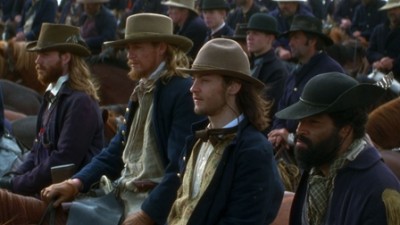
German-born Jacob Roedel (Tobey Maguire) is a Missouri youth shocked into defense of the South when his neighbor Jack Bull Chiles' (Skeet Ulrich) farm is burned and father killed by a band of jayhawkers - militant irregular pro-Union guerrillas. Jake and Jack Bull join a band of bushwhackers - the pro-Confederacy counterparts to the jayhawkers. They join in league with George Clyde (Simon Baker) and Clyde's best friend, a freed slave named Holt (Jeffrey Wright). After a series of raids under the command of Black John Ambrose (James Caviezel), the smaller group retreats to a rural dugout to wait out the winter.

There, Jack Bull romances their local sponsor's widowed daughter-in-law, Sue Lee (Jewel Kilcher). But the relationship is short-lived; after Jack Bull dies, Roedel and Holt team up again with Ambrose's bushwhackers for increasingly vicious attacks. After a murderous raid at Lawrence, Kansas, Roedel and Holt are both wounded, and from there they escape to a safe farm where Sue Lee has been living since Jack Bull's death. At the farm, Roedel and Holt recover from their wounds and make momentous decisions about the future direction of their lives.

No plot summary, however, can do justice to the film's finely-woven themes. German-born Roedel and former slave Holt come to understand each other thanks to similar experiences with prejudice - and, even more importantly, their muddled sense of identity. Roedel's family, as German immigrants, are fully aligned with the Union - yet Roedel himself becomes a bushwhacker out of loyalty to Jack Bull and because he has considered himself, naturally, a Missourian. Later, he learns that his father has been murdered by another band of bushwhackers, throwing his already precarious sense of identity and political position into chaos.

Holt, meanwhile, is a former slave, who nevertheless finds himself fighting on the side of the Confederacy, like Roedel, due to personal loyalty to a friend. Holt has no illusions about the contradiction inherent in what he is doing; it's his own morality that drives him to stand by Clyde. But after Clyde dies, Holt knows, for the first time, what real freedom feels like.

The intertwined stories of Roedel and Holt elegantly transcend issues of race, just as the characters themselves grow to understand that there are vastly more fundamental questions of the human condition than the color of one's skin. At the same time, the film hardly pretends that race isn't a key issue in American life - the struggles of the past are explicitly related to problems that still exist in our country. All of this is expressed by screenwriter James Schamus and director Ang Lee with a far finer sensibility than I am able to convey through words alone here. Such deep conveyance of a complex and insidious social issue is rare in film. It's not just the way Ride With the Devil "addresses" race; it's the way the story portrays the deeper consequences of racial division upon individual human beings.

Ride With the Devil received a lot of flack for its casting, but I can't find any fault with it. Tobey Maguire has a tendency to come off as "soft," but I think he does a fine job here. He is a good actor who carries most of the picture without showing signs of strain. (Although I do take issue with the scenes of domestic comedy in the movie's final act - Maguire handling a baby in particular - I can't blame the actor.) As Sue Lee, Jewel is mostly credible; the only thing she has working against her is that she's recognizable as a music superstar. Otherwise, her performance is fine, if not spectacular.

As Holt, Jeffrey Wright steals the show. Holt is a difficult character, as written, but Wright brings a sense of moral clarity to Holt's words and actions. I'll even go as far as to say that, thanks to Wright, Holt may be one of the most complex, interesting, and significant characters from the last couple of decades of movies. 

Read the full review here

On DVD: Summer Hours (Criterion Collection)

Olivier Assayas's Summer Hours (L'Heure d'ete) is a patient, beautifully-made film about a family dealing with a major, bittersweet transition. The influence of Eric Rohmer (another director who loved the summer) is unmistakable, but Summer Hours is very much its own film, one that looks at personal and familial legacies and how they are maintained - or not - by successive generations. Free of cinematic contrivance, this elegant movie challenges us gently, but firmly, to examine the proportions in which we value the past, present, and future.

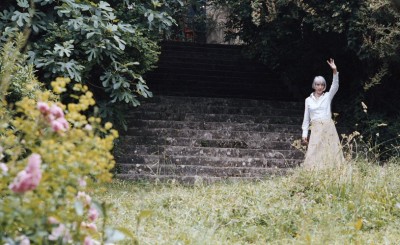
The long opening sequence takes place at the rural family home of the Marlys, where they are celebrating the 75th birthday of their matriarch, Hélène (Edith Scob). Hélène is joined by her three children, Frédéric (Charles Berling), Adrienne (Juliette Binoche), and Jérémie (Jérémie Renier), and their families. Hélène's work for the past several decades has been the preservation of her uncle's legacy; Paul Berthier was a major painter and she has served as executor of his estate, guardian of his papers, and promoter of his work. At the party, Hélène takes Frederic, the only one of her three children who still lives in France, on a guided tour of her final wishes as to the disposition of her belongings, which include two paintings by Corot, several pieces of rare furniture, decorative panels by Odilon Redon, and fine glassware. Frederic, of course, doesn't wish to entertain thoughts of his mother's demise.

But, when Hélène dies several months later, the three children gather again to decide what to do with the house and manage the rest of her estate. Representatives of the Musée d'Orsay in Paris wind up taking a large portion of Hélène's belongings into the museum's permanent collection, and the house is prepared for sale, much to Frédéric's chagrin.

Summer Hours is an immensely pleasant film to watch. Assayas has assembled a fine cast, all of whom work together as a credible family unit. The three Marly siblings actually feel related, unlike other "family" films, where a collection of A-list actors can easily come off as a contrived concentration of ego instead of a group of blood relations. The photography is both skillful from a narrative point of view, as well as beautiful to look at. The house is shot so lovingly that by the end of the picture we feel as though we have lived there ourselves.

Thematically, Summer Hours doesn't offer easy answers. For instance, what are we to make, exactly, of the passing of Hélène's belongings to the Musée d'Orsay? The museum was directly involved in this film's production, and certainly they have an interest in portraying the d'Orsay as the guardian of fine things and protector of legacies. Yet there is an interesting ambivalence in Summer Hours as to the value of that. The objects that wind up in the d'Orsay - a rare desk, a rarer cupboard, and others - are displayed to a largely indifferent audience who pass them by without a glace. A museum, then, no matter how much it reveres its own collection, can't replace successive generations of family, who enthusiastically pass on stories of a piece's provenance, history, and its connections to various people and places.

At the same time, it's demonstrable that the Marlys don't care enough to hold on to these works - or the house they came from, which was once the residence of their great-uncle, an influential painter. The Marly siblings, living continents apart, are complicit in the disintegration of their own extended family; they make conscious choices to remain untroubled by the past, abandoning their shared heritage to an institution.

The film's final sequence takes us back to Hélène's country home, where we see Frédéric's eldest daughter staging a final, massive party before the sale closes. It's a real rager, with dozens of teenagers arriving by car and motorcycle, carrying booze and junk food. With loud pop music blaring, it seems like the place is going to combust with debauchery. But Hélène's granddaughter, who planned it all, escapes the crowd with a boy, taking him on a sentimental tour of the property. This suggestion of a generational shift in values - from embracing heritage to disposing of it, and back again - ends the film on a perceptive, hopeful note.

Read the full review here

3.18.2010

On DVD: Bigger Than Life (Criterion Collection)

Never before available on home video domestically, The Criterion Collection has finally released Nicholas Ray's groundbreaking Bigger Than Life. It's a claustrophobic, small-scale portrait of 1950s suburbia torn apart by a family man's addiction to prescription codeine. James Mason (who also produced) gave a defining performance in the lead role, undergoing a gripping transformation from middle class dad to psychotic would-be prophet of anti-middle class revolution. Released in 1956 to a largely negative reception, it's no surprise that Americans of the 1950s - eased into self-satisfaction with the realization of the postwar American dream - rejected this depiction of small town lives being violently rent asunder by a repressed subconscious cut loose.

Ed Avery (Mason) is a middle class schoolteacher, who lives in a large house on a pleasant street with his wife Lou (Barbara Rush) and young son Bobby (Christopher Olsen). Plagued by mysterious recurring pain, Avery is prescribed codeine, a then-new "miracle drug" that saves his life. The side effects, however, cause creeping madness in Avery, who begins to envision himself as a hero to society, the savior of his family, and the protector of all morality and ethics. With the help of his friend Wally (Walter Matthau), Lou struggles to escape Ed's increasingly tight clutches and seek aid from his doctors.

Read the full review here

3.16.2010

On DVD: Howards End (Criterion Collection)

Watching Howards End is the cinematic equivalent of eating a heavy slice of some magical hybrid dessert - say, tiramisu ice cream pie. It's so delicious and richly layered that it's impossible to enjoy all at once. Multiple viewings are required in order to fully absorb all the ingredients of this masterful movie: the intricate story and screenplay, the characters, the lush production design, the music, and the harmonious conducting of the lot by director James Ivory. True to the source book by E.M. Forster, Howards End is a densely-packed novel on film, consistently driven by detailed character dynamics, which, in turn, are rooted in a very British social hierarchy and the tangled garden of emotional responses that grow from it.

Films committed to the great storytelling traditions of English literature are increasingly rare, and with Merchant-Ivory Productions fading away (Ismail Merchant died in 2005), it's bone-chilling to think that novelistic character-oriented drama may be under threat of extinction. To quell such concerns, the Criterion Collection has re-issued Howards End, improving upon the previous DVD on the Home Vision brand, with updated bonus content. 

Read the full review here

Howards End (Criterion Collection)

3.09.2010

On DVD: Hunger (Criterion Collection)

Watching Hunger is a painful and illuminating experience. It cuts to the marrow of a tendentious, charged historical moment via flawless visual storytelling. The film starts out by documenting the effects of external brutality upon a group of jailed IRA soldiers. A long conversation between two key characters serves as a kind of entr'acte, wherein we are privy to the logic behind the inversion of that brutality. The second act allows that inversion to play out through Bobby Sands' conscious decision to subvert the external brutality with self-imposed starvation, a tactic that simultaneously takes him out from beneath the boots of his jailers, while condemning himself to an even harsher fate than that of his fellows. The film's structure is deliberate and purposeful. In telling the story of the Maze and Bobby Sands, the filmmakers have eschewed historical context and political angles in favor of focusing almost exclusively on life inside the prison. It's a narrow way of covering true events, but it also allows the craft of filmmaking to intuitively find the heart of the story without becoming stuck in the minutiae of historical re-creation.

Read the full review here


On DVD: Paris, Texas (Criterion Collection)

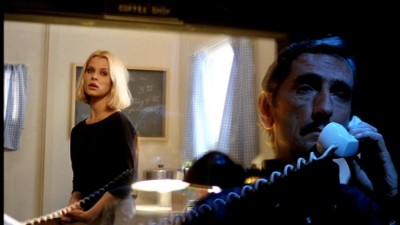
Wim Wenders' Paris, Texas is a film of countless pleasures. Every moment generates a sense that anything is possible - that feeling we all hope for from the movies, but is so rarely delivered. From the wide open spaces of the American Southwest to the Los Angeles suburbs at the foot of the San Gabriel Mountains, the film tracks the physical and emotional journey of a damaged man who struggles to put the pieces of his life back in their proper place. In the lead role, Harry Dean Stanton delivers a performance of unmitigated perfection - a weathered image of a man who self-destructed but lived to tell about it. As Wenders takes us through deserts, mountains, and cities, he shows us some of the subtle ways in which the American landscape defines the character and fate of American people.

Read the full review here


On DVD: Che (Criterion Collection)

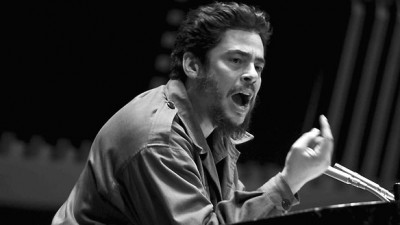
Few twentieth century figures have been so strangely abstracted from the reality of their times as Ernesto "Che" Guevara. From a young age (I was born 9 years after his execution), I have only known his name and image. The use of Che's visage on posters and t-shirts, and the sloganification of his nickname, say much about the ability of capitalism to use even its supposed enemies for profit - while saying nothing at all about the man. Attempts at film biographies have mostly failed, not counting the recent and much-lauded The Motorcycle Diaries, directed by Walter Salles. Steven Soderbergh's four-and-a-half-hour two-part Spanish-language epic Che is a patient, detailed treatment of two key segments of Che's life, and while it doesn't fully succeed as a revelation of his character, the film does reveal and enliven history with an expert's storytelling technique.

Read the full review here


11.19.2009

On DVD: Downhill Racer (Criterion Collection)

Michael Ritchie's debut feature, Downhill Racer (1969), is a quietly thrilling, beautifully-shot film about a particularly American theme. What does it mean to be a champion? Is it a worthy goal in and of itself? These questions are posed in a far more elegant fashion by the film itself, but what's interesting about them is the fact that they are in a "sports film" at all.

Usually the key question for characters in films about athletics is, "How do I win?" We watch, we wonder, and we wait, hoping that they figure out what it takes to persevere and triumph. In Downhill Racer, Robert Redford plays a character driven to achieve those same heights - but without knowing himself, without knowing why he wants to win. This is the dark side of athletic competition, and the movie poses the unasked and unanswered questions behind each and every sports film that preceded it - along with many that followed.
Read the full review here