The 1970s were soaked in the blood of Vietnam and Cambodia, and were reported via Hunter S. Thompson's fear and loathing. Cultural rivalries and civic strife bloomed from our urban centers like fungus from a damp forest floor. Our politics became corrupt, and we knew it. It was a time of war, terror, and general disharmony. It was also an era of unrivaled cinematic excellence, particularly in the United States. From Dirty Harry in 1971 to The Deer Hunter in 1979 and many in between, the decade's films plumbed the psychic depths of what made the 1970s so unrelievedly awful - a decade of dread, distrust, and death. The people responsible for producing children's programming must have felt challenged: how to create something constructive, entertaining, and edifying for kids amid all the horror? This may account for the fact that the 1970s produced some of the worst cartoons known to mankind.
Super Friends, the first incarnation of Hanna-Barbera's long-running but ever-changing series, is one example of the kind of mind-numbing animated havoc that almost wrecked a generation of children. The gulf between this program and Bruce Timm's wonderful Justice League is a deep, black, immeasurable chasm. Super Friends ran one season in 1973-1974 - in other words, concurrently with Nixon's final days. (A more harmonious confluence of televised media nonsense could not have been imagined in Marshall McLuhan's wildest dreams.) We begin with our heroes, a quintet of DC Comics favorites: Batman and Robin, Wonder Woman, Superman, and Aquaman. These five are joined by hip youngsters Marvin and Wendy, who have their own special powers and are always saying things like "Right on!" and "Groovy!" Also along for the ride is Wonder Dog, a transparent rip-off of the most annoying cartoon dog ever drawn: Hanna-Barbera's own Scooby-Doo. Just like Scooby, he growls and "ruffs" moronically, mugging nonstop and rolling his big googly eyes.
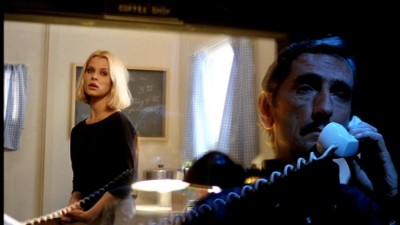 Wim Wenders' Paris, Texas is a film of countless pleasures. Every moment generates a sense that anything is possible - that feeling we all hope for from the movies, but is so rarely delivered. From the wide open spaces of the American Southwest to the Los Angeles suburbs at the foot of the San Gabriel Mountains, the film tracks the physical and emotional journey of a damaged man who struggles to put the pieces of his life back in their proper place. In the lead role, Harry Dean Stanton delivers a performance of unmitigated perfection - a weathered image of a man who self-destructed but lived to tell about it. As Wenders takes us through deserts, mountains, and cities, he shows us some of the subtle ways in which the American landscape defines the character and fate of American people.