4.23.2010

On DVD: Possible Films, Volume 2: New Short Films by Hal Hartley

Hal Hartley was, in a fairly quiet way, one of the defining filmmakers of the 1990s. His spare, mannered, witty style presaged the work of Wes Anderson and Noah Baumbach, and his influence is even visible, to an extent, in Quentin Tarantino's films. The verbose, often opaque dialogue of his strange, still, oddly focused characters suggested the particular angst of that decade - a moody inward paranoia about the location of the border that divides sincerity from irony. Two of his best films - Simple Men (1992) and Henry Fool(1997, and a Cannes winner for Best Screenplay) - deal with this theme in diverse and extremely funny ways. Henry Fool can be read as one of the central cinematic statements of the 1990s, a film that delves deep into the tenor of the era, through characters who grapple with varied, shifting permutations of authenticity.

Hartley has directed four features in the twelve years since Henry Fool - none of which have received much attention from any sector of the film-going population. His most recent, Fay Grim (2007), was a sequel to Henry Fool, and was released by Magnolia Films simultaneously in (a few) theaters and on DVD. The film was not only deeply uninteresting, it almost leeched power away from its immensely superior predecessor.

I'm not surprised that Hartley seems to be moving away from films - or at least, away from theatrical features. His work in the 1990s was so of the 1990s - and how does an artist so engaged with a decade deal with an evolving culture? So, he has moved around Europe a lot lately, doing theatrical work and short films.

It comes as a great sadness to report that the five shorts in Possible Films, Volume 2 - all of which were made in the last five years - are like soggy crumbs fallen from the plate of a master. These lifeless experiments in form and style breathe none of the wit or mystery of the work Hartley is known for; the very real enthusiasm for filmmaking one feels when watching his best features is totally absent. Hartley wields the camera here with desultory disinterest, capturing these indulgent shorts as if he's being forced to do so against his will. There's no heart in any of them.

A/Muse (2009, 11:00) is about a young German actress determined to be cast by a well-known director (implicitly Hartley) in his next feature. She writes to him and seeks him out at the theater where he is directing a play, but these connections are missed. She finally receives a letter in which the director explains that he has left Germany for New York, where he intends to start a new business selling a brand of European window. Coy without being charming, A/Muse is the perfect introduction to this set of five transparently self-absorbed films.

Implied Harmonies (2008, 28:05) is the most engaging of the five. It is a documentary about the production of an opera called La Commedia, composed by Louis Andriessen and directed by Hartley. (It was staged in Amsterdam.) This strange film, however, does not tell you a whole lot about the opera in concept or content. The film is too impressionistic to convey information, even though it's about a real project that actually took place. Still, there is something interesting here about the collaboration between Andriessen and Hartley, even though it's inadequately presented.

The Apologies (2009, 13:36) is about an aspiring actress who house-sits for a writer friend, where she practices a monologue repeatedly. The friend's ex-girlfriend shows up to drop off a set of keys and recite a rather trite monologue of her own, thinking the writer is in the apartment somewhere, hiding from her.

Adventure (2008, 20:26) is a really strange, alarming, and oddly invasive autobiographical piece about Hartley's relationship with his wife, the Japanese actress Miho Nikaido. Despite the film's ostensible "intent," I learned nothing about love, marriage, or Nikaido from this film - what I did learn is that Hal Hartley is a much bigger egotist than I would have imagined. There are cutesy title cards that talk about Hartley and Nikaido in the third person, a lot of tiresome shots of trains and orchards, and ongoing inane chatter. There's something particularly upsetting about the moment when Hartley casually presents his wife's candidly naked breasts for all to see.

Accomplice (2009, 3:08) is an indescribable short that includes shots of Hartley's colleague Jordana Maurer at work and a voice-over by Jean-Luc Godard about how it's always "possible" to make films. Easy for Godard - and Hartley - to say.


On DVD: Tales from the Script

Tales from the Script is documentary that consists solely of interviews with prominent (and a couple of not-so-prominent) screenwriters exploring the triumphs and tragedies of being a writer in Hollywood. The interviewees' comments are cut together in thematic groups that cover everything from making a pitch to working with superstars to the role of the writer on a film set. This compendium of anecdotes and insight is an excellent record of the writer's perspective on the film production process, and will be an invaluable document for those considering any kind of career in the movies.

Participants include Oscar-winners William Goldman, David S. Ward, and Bruce Joel Rubin; writers who have experienced huge commercial success such as Shane Black and John August; independent writers of more personal material like Ron Shelton and Paul Schrader; as well as writer-directors like John Carpenter and Frank Darabont.

Almost each and every interviewee in this documentary talks about the positive and the negative - the dark and the light in screenwriting. Their experiences have almost all been roller-coaster rides - and we're talking about some of the most successful writers in the business. This was the most surprising thing I learned from the documentary: that all of these writers have had markedly similar experiences - although well-paid and having a relatively good time, they all must confront the insurmountable frustrations of studio executives, their "ideas," and the vast unpredictability of the studios' decision-making process.

William Goldman expounds upon his theory that, in the film business, no one really knows anything. Paul Schrader explains why his Dutch Calvinism has gelled so well with Martin Scorsese's Italian Catholicism. Ron Shelton claims that all of his screenplays derive from his own personal background and interests. Shane Black talks about early successes (Lethal Weapon, etc.) that left him blocked for several years thereafter. David Hayter explains how he essentially fell into screenwriting while working on X-Men. Guinevere Turner pulls no punches discussing Uwe Boll's hijacking of her screenplay for Bloodrayne; on that project, Turner wrote only a single draft before it was accepted, heavily modified, and shot by Boll.

Although there is much to glean from the documentary, especially for those interested in pursuing a writing career, several of the interviewees (particularly Carpenter and Goldman) are adamant about the unpredictability of it all - that there are no hard and fast rules and that the ground is constantly shifting beneath a writer's feet. A need to stay agile, motivated, and informed seems to be one of the few substantial "rules" for Hollywood writers - and a key to maintaining one's creativity and sanity.

Tales from the Script was a parallel film and book project (see the above image), and First Run Features generously sent a copy of the book along with the DVD screener. The book is more thorough than the film, running about 350 pages. But the whole is a straightforward, well-organized set of material. The film alone is alternately inspiring and discouraging, although the discouraging parts grow out of a sense of realism rather than being merely depressing.

4.02.2010

On DVD: The Blind Side


(The following was transcribed from the hand-written notes* of an assistant present during a pre-production meeting for The Blind Side attended by representatives from Alcon Entertainment and Warner Brothers. Items have been numbered and italicized for readability. My annotations are throughout. )

    1. Bestselling book by respected author Michael Lewis.
    2. Jettison Lawrence Taylor story; too edgy.
The book's full title is The Blind Side: Evolution of a Game. Had Lewis's book been fully adapted, telling the parallel tales of the young Michael Oher and of Lawrence Taylor at the height of his game, it would have made a vastly more interesting film. The significance that Lewis draws from pairing these stories - about the nature of football and how it has changed in recent years - is a sort of literary magic trick, but without fakery.

    1. For Christians; that "Thomas Kinkade" feeling.
    2. In Memphis, segregation is a fact of life.
This is an assumption by the filmmakers that is set down without giving us any idea of what Memphis, as a city, is like. Most of this film feels like it takes place in Memphis in, perhaps, the 1950s. In fact, it's set within the last decade. The racial attitudes that are portrayed do no credit to white residents of that city. I am in no position to say whether they are realistic. However, they certainly appear simplistic, and for a city in which racial tension has been a defining feature for centuries, it would seem as though finer nuance would exist on the spectrum between racism and brotherhood. In fact, I'd hazard a guess that Southerners generally hold a more mature, self-aware grasp of the issue than, say, Californians. But in The Blind Side, if you're white, you're either racist or angelically tolerant, like the Tuohys, who take in a black teenager without much fuss. The not-so-subtle racism of this movie is conveyed visually, too: if you're white, you exist among glowing amber hues; if black, you live in a perpetually cold steel-blue haze.

    1. Lead is a giant homeless teenage black boy whose parents are on drugs or dead, and he needs a leg up.
    2. White woman takes poor black boy to greatness; strong female lead (Leigh Anne).
    3. Are we nervous about seeming racist?
    4. Spunky.
    5. Spunky. Spunky.
    6. Sandra Bullock has turned script down.
Bullock should have never relented. It's a poorly-written role that calls for the following acting "challenges": Bullock must maintain an out-of-fashion frosted hairdo; she must stay chipper and aggressive and witty - you know, like Vicki Lawrence on Mama's Family, except with a great ass. Also, she must, at least once, restrain tears. How Bullock - who I won't deny has a certain innate charm - won an Oscar for this thin stereotype of a part is beyond my comprehension.

    1. Other black characters: dangerous, drug-addled, lewd.
    2. Other white characters: friendly, homespun, cuddles.
    3. Are we nervous about seeming racist?
    4. White woman's son is robust comic relief; cast Howdy Doody if available.
As the younger son, who goes by SJ, Jae Head proves to be one of the most annoying junior performers on film in a long time. He does look like Howdy Doody incarnate, and I'd rather the producers had cast the marionette instead of this grating child, whose incessant mugging and face-pulling is positively bizarre.

    1. Are we nervous about seeming racist?
    2. Director? Someone from the South; someplace homespun and friendly. NO ANGELENOS OR NEW YORK JEWS.
John Lee Hancock is capable of far better than The Blind Side. His much-maligned The Alamo is a lot better than its reputation; his Dennis Quaid baseball picture, The Rookie, is very strong; and his screenplay for Clint Eastwood's A Perfect World is nothing short of outstanding. (And his adaptation of the difficult Midnight in the Garden of Good and Evil - also for Eastwood - wasn't bad, either.) So what happened here? I have no clue, except to say that the film is jam-packed with narrative shortcuts and clichés; it's a film that suggests a minimum of pre-production and a very fast production schedule. Everything is cursory, without attention to the details of character, setting, or even the movie's broader themes. In short, it's a hack job.

    1. Bullock would be wonderful. Why did she turn us down? How can we get her?
    2. Julia Roberts? Too metropolitan?
    3. Someone heard that Tim McGraw actually loves Taco Bell!
As the owner of several dozen Taco Bell franchises, McGraw gives the most convincing performance in the movie. Let me repeat that: Tim McGraw gives the most convincing performance in the movie. As Oher, Quinton Aaron holds his own and projects a certain power, and that's saying something because his under-written role has even less depth than Bullock's. Yet through the hysterical smoke screen of her peppy Southern maxims and nonsensical football dialogue, Aaron manages to convey something interesting.

    1. The 16-year-old daughter should be uncomfortably hot.
    2. SPUNKY. Sass-mouth. Straight-shooter. Loves Jesus. Homespun.
    3. Black boy shouldn't seem too "black." He's kind and sweet. Like Gentle Ben. Or Jesus. Some say He was black. We don't really know. Parallel could work. They both suffered with dignity.
    4. String out first hour so that it feels like three. Respectable films are slow!
The Blind Side runs 128 minutes and feels like it's at least 50% longer than that. The film's first half is very slow. Although further cutting would not have solved the film's fundamental shortcomings, you could easily cut 30 minutes without losing anything important.

    1. Bullock on phone now. She is still thinking about it.
    2. Lure Bullock with promises of enormous Oscar campaign. Keywords: respectable; prestige; homespun; cuddles.
    3. Does Bullock prefer "Sandra" or "Sandy" in casual conversation? Follow up.
    4. Call from Howdy Doody's agent! He has expressed deep interest. Requests huge supply of Pixie Sticks and Pepsi to be available on set at all times.
    5. Large black boy (Michael) and small white boy (Howdy) singing "Bust a Move" will be the mismatched comic highlight of the film.
    6. No one has that spunk but Bullock. She is a must. And she can do Southern accents.
    7. No writer yet. Screenplay writes itself. Whites helping blacks. Everyone feels good.
    8. Are we nervous about seeming racist? 


      *Satire!

      Read the full review here

On DVD: Henri Cartier-Bresson: Collector's Edition

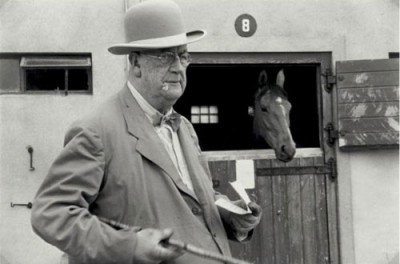
The father of photojournalism, Henri Cartier-Bresson is not as well known for his films as he is for his photographs. Known for his unromantic portraits of urban life and coverage of war-torn corners of the world, the co-founder of the international cooperative Magnum Photos and author of the book known in English as The Decisive Moment was also a documentarian. (He also served as second assistant director to Jean Renoir on two films, one of which was The Rules of the Game, in which he also acted!) This two-disc set from New Video thoughtfully compiles all of Cartier-Bresson's films, as well as a collection of short subjects about the man and his art.

Disc 1: In his sideline as filmmaker, Cartier-Bresson made two documentaries about the Spanish Civil War, one about prisoners of war returning home after World War II, and, much later, two short television documentaries in the United States. These five films are all included on the first of the two discs in this set.

Victory of Life (1937, 46:53) is very much a pro-Republican propaganda piece documenting the conditions on the ground in Madrid during the Spanish Civil War, for citizens and soldiers alike. It's an effective film assisted by the immediacy of the footage, much of which was shot on the front lines, and edited with a strong narrative sense.

Spain Will Live (1938, 43:50) tells a more politically-focused story, one that explicitly demonizes the Fascist-backed coup in Spain and details the political maneuvers behind the war. It's as interesting as the companion piece that precedes it.

The Return (1945, 32:22) is an American-funded documentary about the return of former prisoners of war to their homelands at the close of WWII. It contains much very moving footage, though its arrangement here seems hasty, and the narrative structure is weak. Still, it's of great intrinsic value as an historical document.

California Impressions (1970, 25:03) is the first of two short color films that Cartier-Bresson did for CBS News. It is, as its title suggests, impressionistic, lacking a narrative form. It's a collection of scenes - a ladies' auxiliary luncheon/fundraiser, high school flag girl tryouts, a United Farm Workers rally, antiwar protests, a strange "workshop" for couples - that provide an overview of the vast variety of lifestyles represented in the nation's most populous state.

Southern Exposures (1971, 25:13) is the second of the two CBS films. Cartier-Bresson provides a voice-over introduction to his trip to the American south. Like the California film, this one presents a variety of points of view and experiences. We meet a woman whose plantation home is open to tourists, Charles Evers (at that time mayor of Fayette, Mississippi), attendees at a cattle auction, a group of liberal white discussing race, and witness an altercation between state police and peaceful demonstrators. Powerful stuff.

Disc 2: The second disc contains material about Cartier-Bresson; only the final piece was personally made by him.

Henri Cartier-Bresson: The Impassioned Eye (2003, 52:04) is a recent piece made with Cartier-Bresson's participation. He is interviewed here at around age 90, just a few short years before his death. He remains a vibrant artist with strong ideas and direct involvement in making photographs. The documentary is dubbed, which I find distracting. I wish subtitles were an option.

Henri Cartier-Bresson: The Modern Adventure (1962, 29:25) shows the photographer at work and in discussion of his artistic principles. This piece takes a somewhat academic approach, which offers a nice contrast to the other films in this set.

Contacts (1994, 11:51) looks at Cartier-Bresson's contact sheets. This proves more interesting than one might think. Movement from one shot to the next, to the next, and so on, provides insight into how the artist sees things, and into his compositional skills.

Flagrants Delits (1967, 27:25) is a straightforward montage of Cartier-Bresson's most well known photographs. Accompanied by an angular, non-melodic musical score by Diego Masson, this film is a nice introductory overview of the photographer's work.

A Day in the Studio of Henri Cartier-Bresson (2005, 15:43) was shot in 1989, and shows the artist at work: drawing, talking, painting, and talking some more. This is the only instance in this set of Cartier-Bresson speaking directly into a camera.

Lest We Forget: A Letter to Mamadou Ba (1991, 3:04) was made by Martine Franck and Cartier-Bresson for Amnesty International to protest the killing of two young Mauritanian shepherds by national police. 

Read the full review here

On DVD: The African Queen (Commemorative Box Set)

The African Queen, one of old Hollywood's most beloved films, has finally come to DVD after years of squabbling over rights and a meticulous digital restoration. The result is a happy new life for this painstakingly-produced romantic adventure, highlighted by two appealing lead performances.

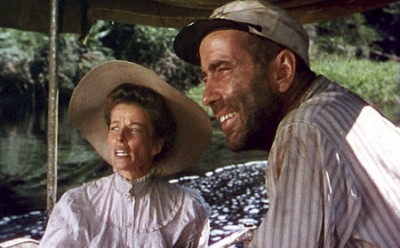
After her brother's death, English missionary Rose Sayer (Katharine Hepburn) and Canadian riverboat pilot Charlie Allnut (Humphrey Bogart) flee German East Africa. The First World War has broken out, and they are behind enemy lines. Aboard Charlie's boat, the African Queen, Rose devises a plan to thwart a German gunboat downriver by outfitting the Queen as a floating torpedo and ramming the Germans. Charlie is reluctant; the plan is suicidal. Rose maintains her commitment to the mission, however, and Charlie finally relents. From this point forward, the story follows Charlie and Rose as they travel downriver, encounter a number of rapids and other dangers, and fall into a tentative romance. Tension therefore develops along parallel lines; as the objective of their explosive plot grows nearer, so do the two leads to one another.

I should admit that although I like The African Queen, there are a lot of people who will like it more than I do. There is no doubt that it's charming and consistently engaging, but in the end, it feels like John Huston-lite. Huston's films are often challenging, even from a contemporary perspective, and they are marked by strong writing, memorable characters, and propulsive, economic direction. While much of that is true in The African Queen, its story is ultimately too thin to sustain this ambitiously-mounted film. This script, credited to Huston and James Agee, is skillful, and maintains a good balance of character development, humor, and suspense. Perhaps what prevents the movie from reaching the higher plateaus of Huston's best films (like The Treasure of the Sierra Madre and The Maltese Falcon), is a lack of edge, and the fact that, although we like the characters here, they lack depth. There isn't much mystery as to who they are and what they want out of life. This renders the film's narrative arc kind of flat; onscreen danger can't compete with the metaphysical suspense of not knowing what a character may say or do next.

It's not news that The African Queen was a troubled production. Co-writer and director John Huston turned the film into a personal challenge to his own masculinity; uncredited co-writer Peter Viertel memorably fictionalized this in his novel (and later, screenplay) White Hunter, Black Heart (adapted to film by Clint Eastwood in 1990). The production difficulties are also well documented in the supplemental material included here. Given all that the cast and crew went through, it's amazing that the final film is as memorable and moving as it is. The leads were put through the wringer, but were able to deliver indelible portrayals nonetheless.

Hepburn and Bogart are well-matched. Hepburn's repressed, uptight old maid is somewhat more in her comfort zone than Bogart's squirrelly, ragged Allnut. Hepburn's performance is probably the more convincing of the two, even though Bogart won the Oscar. She exudes a buttoned-up comportment and contained Puritanical attitude that likely derives much from Hepburn's own Northeastern family background. Bogart, however, is playing against type as the screwy Allnut. He's primarily a comic character, a friendly, unsophisticated slob. Bogart is likable in the role; his metamorphosis from brooding loner into the gregarious Allnut is sure to have won over conservative oldsters at the Academy. But one can't help notice how hard he acts in the role; we are constantly being reminded that this is Bogart playing against type. It's an inescapable distraction. It's not a bad performance, just a very visible one.

Still, the leads generate a pleasing dynamic, and their budding romance is relatively believable. It is the heart of the movie, which, as it progresses, piles on a host of photographic techniques in order to keep the story credibly placed on an African river in 1914. The Technicolor photography by the great Jack Cardiff is excellent. The production design is brilliant. Studio shots and location footage are seamlessly matched. The restoration job highlights all of this wonderfully. 

Read the full review here